 My Kuvar
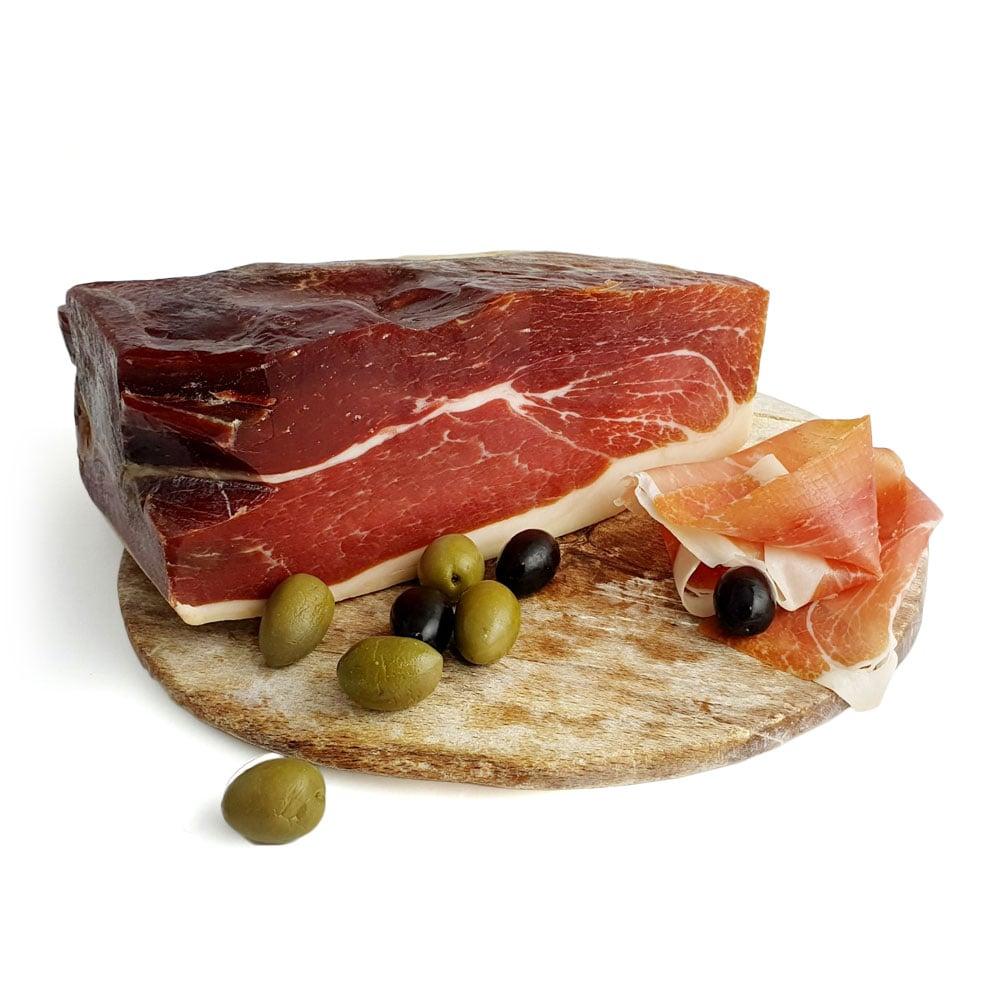
Prosciutto
Prosciutto (also known as prsuta; from the Italian prosciutto: dried, from Latin prae exsuctus, or perexsuctus: very dried) is a traditional dry-cured ham made by drying and salting pork legs. This delicacy has a long tradition in Mediterranean and Balkan countries and is renowned for its exceptional flavor and aroma.
The process of making prosciutto:
- Preparing the meat: Fresh pork legs are carefully processed to remove all fat and skin. This is an important step to ensure the prosciutto is evenly dried.
- Salting: The meat is generously salted with sea salt and left to rest for several weeks. The salt helps to draw moisture out of the meat and acts as a natural preservative.
- Drying: After salting, the legs are washed to remove excess salt and then left to dry in the open air. The drying process can take from several months to over a year, depending on the size of the leg and the climatic conditions.
- Aging: The prosciutto is left to age in controlled conditions. During this period, the meat develops its characteristic flavor and aroma.
Prosciutto can be consumed in various ways. It is most commonly served thinly sliced as an appetizer, alongside cheeses and olives, or as part of sandwiches and salads. Its rich and salty flavor makes it an ideal addition to a variety of dishes.
Prosciutto is not only delicious but also a healthy food, rich in proteins and essential minerals. Thanks to the traditional preparation method, prosciutto is a true delicacy that reflects the culture and customs of the region where it is produced.